Somebody still has to care
There’s a lot of talk lately about taste; discussions around how, as LLMs get better and better, humans are meant to differentiate ourselves from the machines. If Claude can one-shot a beautiful website in 15 seconds, what’s left for us to do?
But you and I both already know that there is a huge variance in Claude’s output depending on who does the prompting – the intangible ability to encode what you want, rather than having an LLM guess, is what a seasoned developer has over a newbie. Craft and taste come with years of experience, after all. So now, as we concede that software development has become commoditized, we look to codify taste itself onto our agents, so that it, too, can just be a markdown file that they consume.
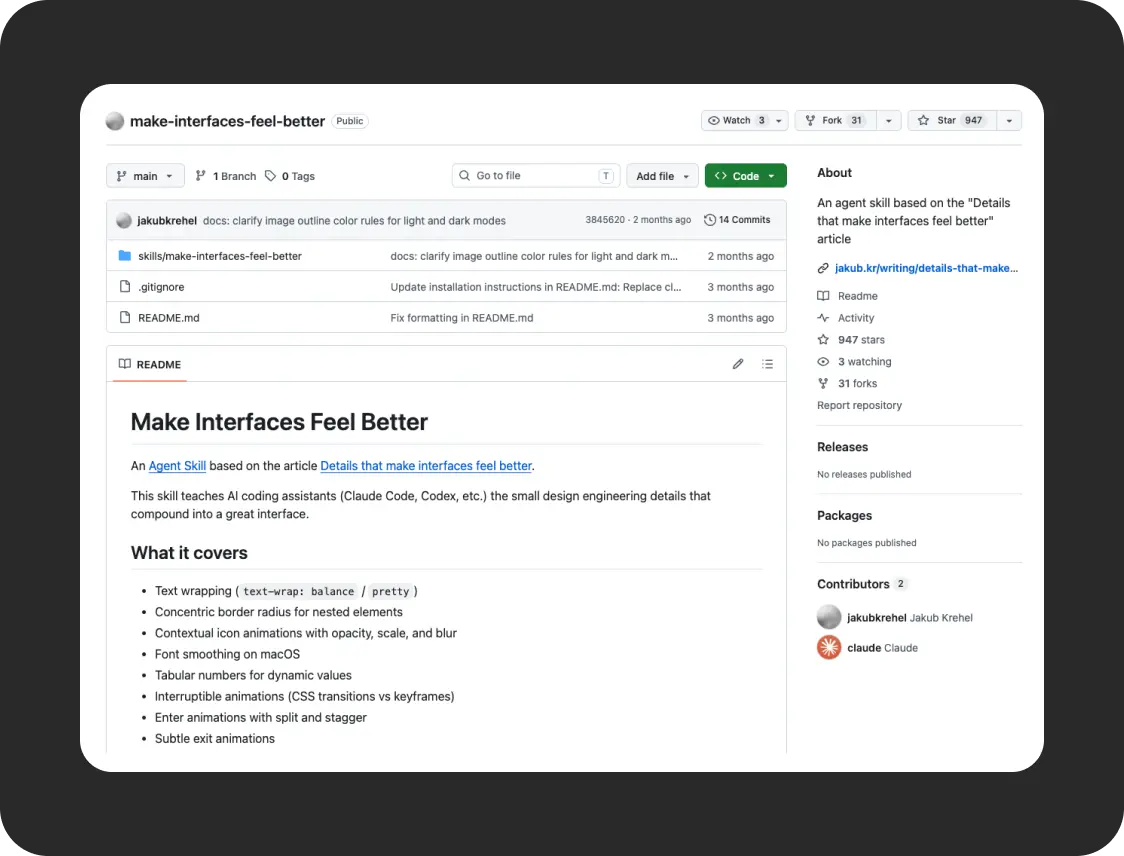
There have been big leaps in this area already: highly skilled design engineers like Emil Kowalski and Jakub Krehel have translated their unmatched sense of taste into shareable skills, readily available for anyone with a machine and an LLM subscription. Design tools like Variant UI and Claude Design make crafting interfaces as accessible as ever, no design knowledge needed. But this now leads to the inevitable question: if a layman, with no software or product experience, vibe codes an entire production-level application leveraging all these tools and taste drivers to their full extent, can they attain something of quality?
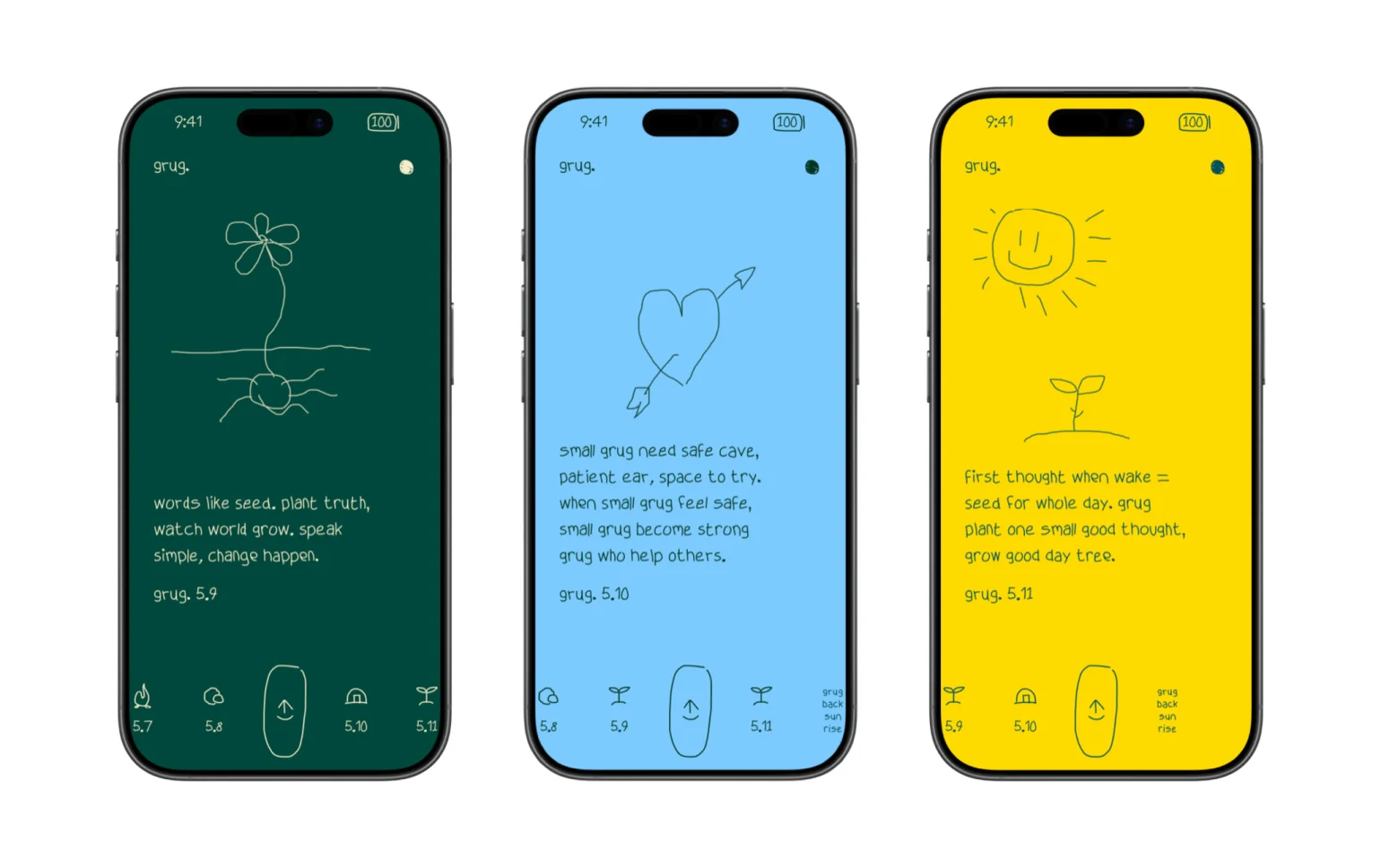
I’ve been thinking about this question a lot recently (kind of hard to escape the dread of becoming obsolete with how good LLMs are now), but I keep finding that there has to be something else beyond taste – an additional filter that truly separates great applications from middling ones. And then I saw a tweet by Jip Vandervelde, one of the creators of Grug, on the heels of his app winning Apple’s 2026 design award for delight and fun. One particular quote really stuck out to me:
“AI can write your code. It can help you move fast. It can make impossible things feel possible. But it cannot care. It cannot make your app memorable. It cannot make your app feel like it has a soul.”
Grug is as simple an app as they come, the creators themselves have said the code was written by Codex, prompted by designers. But Grug has a soul, and – however intangible this is – it does not feel like I can recreate its intrinsic magic easily. It feels beautiful, it feels fun, it feels like its creators cared about what they were building.
And that’s ultimately the answer to my question: no matter how advanced LLMs get (at least within the realm of how they operate currently), no matter how much taste we can inject and encode, they cannot care. Sure, AI has gotten so good that it already preempts some of these insights: it’s able to seek out quality and think about accessibility, maintainability, delight, before we can even prompt it to do so.
But an LLM doesn’t have the capacity to care about your application; you must be the one telling it to make it better. Even if Claude can improve a whole codebase or feature in a split second, you still have to be the one directing it to do so.
So, yes, LLMs can help anyone build faster and better than ever before, especially with the diversity of free tools and skills at our disposal, but you can’t actually make something good unless you care. You still have to be the ultimate filter for your product’s quality. You still have to put yourselves in the shoes of your users and understand what works for them. You still have to pick every nit, obsess over every detail, and fix every issue until it feels right.
You still have to be the one who cares.